How Hair Growth Cycles Impact Your Electrolysis Results
Understanding the hair growth cycle is an essential part of achieving successful, long-lasting results with electrolysis. On average, there are approximately 65 to 100 hair follicles per square inch of skin, and each follicle functions independently. Hair grows in three distinct stages: Anagen (active growth), Catagen (transition), and Telogen (resting). During the Anagen phase, the hair is fully attached to its blood supply and actively growing, making it the most ideal stage for effective treatment. In the Catagen phase, the hair begins to detach from the follicle, and in the Telogen phase, the hair is fully at rest and preparing to shed.
Because each follicle operates on its own cycle, not all hairs are visible on the surface of the skin at the same time. This is why electrolysis requires multiple sessions—while some hairs are in the optimal Anagen phase, others may be transitioning or resting beneath the surface. Although hair can technically be treated at any stage, targeting hairs during their active growth phase leads to faster and more permanent results. Since it is not possible to determine a hair’s exact stage until it is treated, consistency and proper timing between sessions are key.
This natural cycle of growth, rest, and shedding is continuous. During the active phase, the follicle uses nutrients supplied by the blood to produce hair. The hair then progresses through the transitional and resting phases before shedding, allowing a new hair to begin forming. This repeating process continues until the follicle eventually slows down and stops producing hair altogether. Understanding this cycle helps set realistic expectations and highlights the importance of staying consistent with your treatment plan to effectively target every follicle over time.
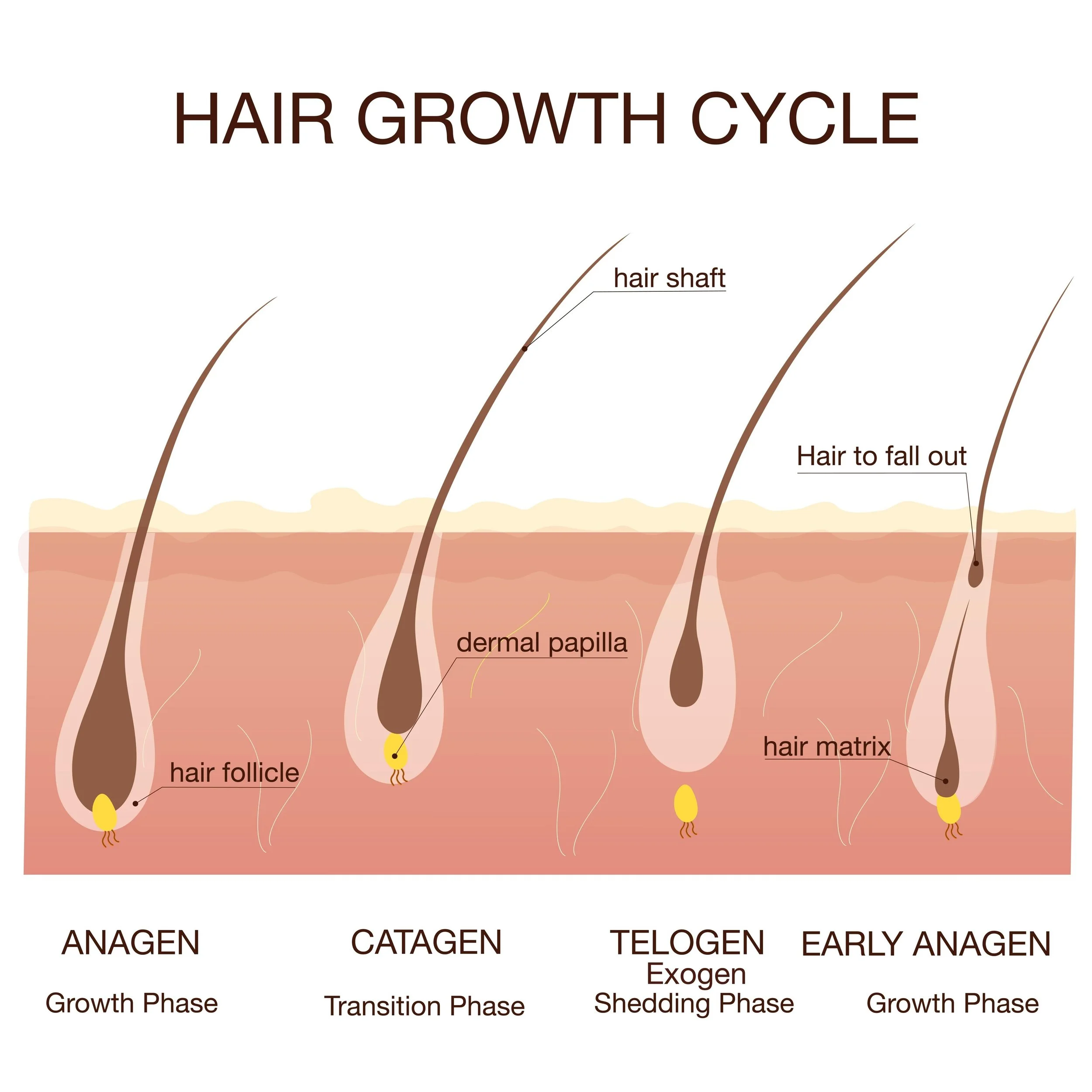
Anagen (Active Growth Phase): The hair is actively growing and fully connected to the blood supply. This is the most effective stage for electrolysis, as the hair can be permanently treated at its root.
Catagen (Transitional Phase): The hair begins to detach from the follicle and the blood supply is cut off. Growth stops, and the follicle starts to shrink, making treatment slightly less effective than during anagen.
Telogen (Resting Phase): The hair is fully detached and resting in the follicle before naturally shedding. A new hair will eventually begin forming beneath it, restarting the cycle.
In addition to active follicles, the skin also contains dormant follicles that are not currently producing visible hair but have the potential to become active over time. These follicles can be stimulated by factors such as hormonal changes, aging, certain medications, or underlying medical conditions. As a result, clients may notice new hair growth in areas that were previously treated or appeared clear. This is a normal occurrence and does not indicate that previously treated follicles are regenerating, but rather that new follicles have entered the growth cycle. Because of this, occasional maintenance treatments may be needed to address newly activated hairs and maintain long-term results.
It’s also important to understand the difference between vellus and terminal hairs, as they respond differently to treatment. Vellus hairs are fine, soft, and lightly pigmented—often referred to as “peach fuzz.” These hairs are typically less noticeable and may not always require treatment unless they become more prominent. Terminal hairs, on the other hand, are thicker, darker, and more deeply rooted in the follicle. These are the hairs most commonly targeted during electrolysis, as they are more visible and often more bothersome. In some cases, vellus hairs can transition into terminal hairs due to hormonal influences, which is another reason why ongoing observation and occasional follow-up treatments can be beneficial.